You wouldn’t plate a dish on a dirty plate. You wouldn’t prep on an uncleaned surface. You wouldn’t reuse a sauce that had been sitting out and losing its quality for three days.
And yet, in many commercial kitchens, frying oil, one of the most active, flavour-critical ingredients in the entire operation — is still only changed when it looks bad, smells off, or someone finally decides it has gone too far.
That mindset is costing your kitchen.
In food quality. In consistency. In staff environment. In customer experience. And in money.
Ask any chef what makes a great chip, a perfect piece of fried chicken, or a delicate tempura batter. The oil is never just the medium. It becomes part of the dish.
Fresh, well-maintained oil fries clean and golden. It gives food that unmistakable crisp, rich colour and flavour clarity that customers come back for.
But oil doesn’t stay fresh on its own.
Every fry cycle introduces unwanted, often toxic compounds and increases their concentration, including acrylamide, free fatty acids and trans fats. These are not just “oil issues” in the background of the fryer – they affect what goes out on the plate.
As oil deteriorates, food becomes darker, heavier and less crisp. It absorbs more oil, loses its clean finish, and starts to transfer flavours from previous foods cooked in the same oil. What should taste like chips, chicken or fish can start to taste like the oil itself.
Changing oil every couple of days is a workaround, not THE solution. It acknowledges that the oil is degrading, but only reacts once the quality has already dropped.
Think about your kitchen hygiene standards.
Every surface, every piece of equipment, every utensil cleaned, sanitised and signed off. It is non-negotiable.
Now think about your fryer oil.
You heat it. You use it. You let it sit overnight. You heat it again. Impurities build up. You repeat this cycle until someone decides it is time for a change, usually based on colour or smell.
But colour and smell are lagging indicators. By the time oil looks tired or smells heavy, it’s often already well beyond its best.
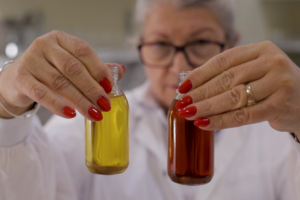
There is also the staff environment to consider. The compounds created and accumulated during frying do not only stay in the oil, but can become airborne through fumes from the fryer and other cooking appliances, meaning the kitchen team breathes them in throughout service.
Anyone who has worked in a busy kitchen knows that end-of-shift smell: the heavy, greasy, pungent smell that sits in hair, clothes and skin. Cleanoil does not just improve the food. It helps create a cleaner kitchen environment too.
The gap between how kitchens treat their surfaces and how they treat their frying oil is one of the most overlooked quality and hygiene blind spots in commercial food operations.
Beyond Oil closes that gap in 5 to 10 minutes a day.
Beyond Oil is a patented mineral powder filtration solution, developed specifically for commercial frying environments.
When added to the oil as part of a simple daily treatment process, the mineral powder absorbs those unwanted compounds including acrylamide, free fatty acids, PAHs and trans fats, which are then removed through the treatment process.
The result is cleaner oil that performs better for longer.
Your oil’s Total Polar Materials, known as TPM, stay well below the commonly recognised 25% threshold used to assess frying oil quality. But the difference is not only something you measure. It is something your kitchen can see, smell and taste.
You see it in the colour and clarity of the oil
You smell oil that smells clean & fresh, not stale, greasy and of previously-cooked-food.
And you taste it in food that tastes more like itself. Chips taste like chips. Chicken tastes like chicken. Fish tastes like fish. Flavours are cleaner, sharper and less affected by flavour transfer from other foods in previous frying cycles.
The practical benefits are significant.
Oil that stays fsreher fries better.
The colour, smell and clarity of your oil directly affect the flavour, texture and finish of everything that comes out of the fryer. When oil is properly maintained, food comes out lighter, cleaner, crispier and more consistent.
Customers notice. Chefs notice. And over time, that consistency becomes part of the kitchen’s standard.
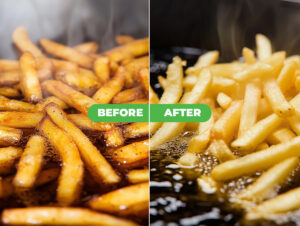
Cleaner oil helps produce cleaner food.
By removing unwanted compounds from the frying process each day, kitchens can serve fried food with better flavour, better texture and a cleaner finish. It is not about creating fear around fried food. It is about treating frying oil with the same professional care as every other ingredient in the kitchen.
If oil touches every fried dish you serve, then its condition matters.
Oil that lasts weeks instead of days can fundamentally change your oil budget.
Less purchasing. Less storage. Less handling. Less waste.
For any kitchen operating at volume, the savings can be substantial — especially when oil is no longer being treated as something to use, abuse and throw away, but as a vital ingredient that can be professionally maintained.
And every Litre of frying oil carries an environmental cost across its lifecycle – from production and transport to collection and disposal. Together these contribute approximately 4Kg CO2e per litre.
For many kitchens sustainability can feel complex, expensive and disruptive, but Beyond Oil turns it into an easy operational win, a low-hanging fruit of kitchen sustainability.
Introduce Beyond Oil and the main benefits are immediate – lower oil spend, longer oil life, improved oil quality and cleaner tasting food. The sustainability gains are delivered almost as a bonus, built-in…less oil consumed, less waste created and fewer replacement oil deliveries.
A single site, with 2 x 25L fryers replacing oil every 3 days, can realistically expect to cut more than 8,000Kg CO2e annually from their carbon footprint,
The kitchens that adopt Beyond Oil are not simply adding another product to the shelf.
They are changing how they think about oil.
Oil management moves from reactive to proactive. Instead of changing oil when it looks bad, the kitchen manages the oil daily, just as it manages hygiene standards, checks temperatures and maintains equipment.
That shift matters.
Because the real question is not, “When should we change the oil?”
The better question is, “How do we keep our oil performing at its best every service?”
Beyond Oil is built around that question.
Vital Hospitality does not simply drop off a box and leave the kitchen to work it out.
The process is introduced properly, with support available in person, by video or by phone. The team creates a suitable SOP for their fryer, supports the kitchen through the onboarding process, and helps make any small adjustments necessary, until the product is working at peak performance, and the team is comfortable using it correctly.
The trial box is not there because the technology needs proving. It is there so the kitchen can experience the process with its own equipment, its own menu and its own team.
In many ways, the trial is not really a test of whether Beyond Oil works.
It is a test of whether the kitchen is professional enough to use it properly.
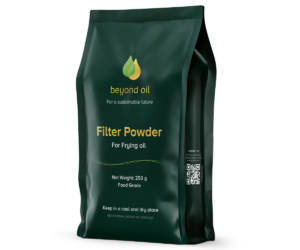
Beyond Oil is compatible with common oil filtration systems, including manual, internal and portable systems, as well as Henny Penny fryers.
A starter pack is available for kitchens that want to introduce the process with minimal commitment. It gives your team everything needed to trial Beyond Oil in your own kitchen, with results you can see, smell and taste for yourself.
Because once you have fried in properly maintained oil, going back to the old way is not really an option.
Order a trial pack from Vital Hospitality:

